Last updated 2026-08-19
TL;DR
Connecticut does not issue a standalone boilermaker license. Most people start as a registered apprentice through a Boilermakers lodge or a CTDOL registered contractor, then complete about four years of job hours plus class. Building heating boilers can require a DCP Heating, Piping and Cooling license. Confirm applications and fees with the hall, CTDOL, and DCP.
How do you start as a boilermaker in Connecticut?
You start by getting hired and indentured as a registered apprentice. Connecticut does not sell a standalone boilermaker license, so the real door is an apprentice agreement, a contractor who will put you to work, and the site cards the owner requires. Call the Boilermakers lodge that dispatches your county. Ask the Connecticut Department of Labor which boilermaker programs are registered right now.
That is the whole entry path. The rest is paperwork and showing up.
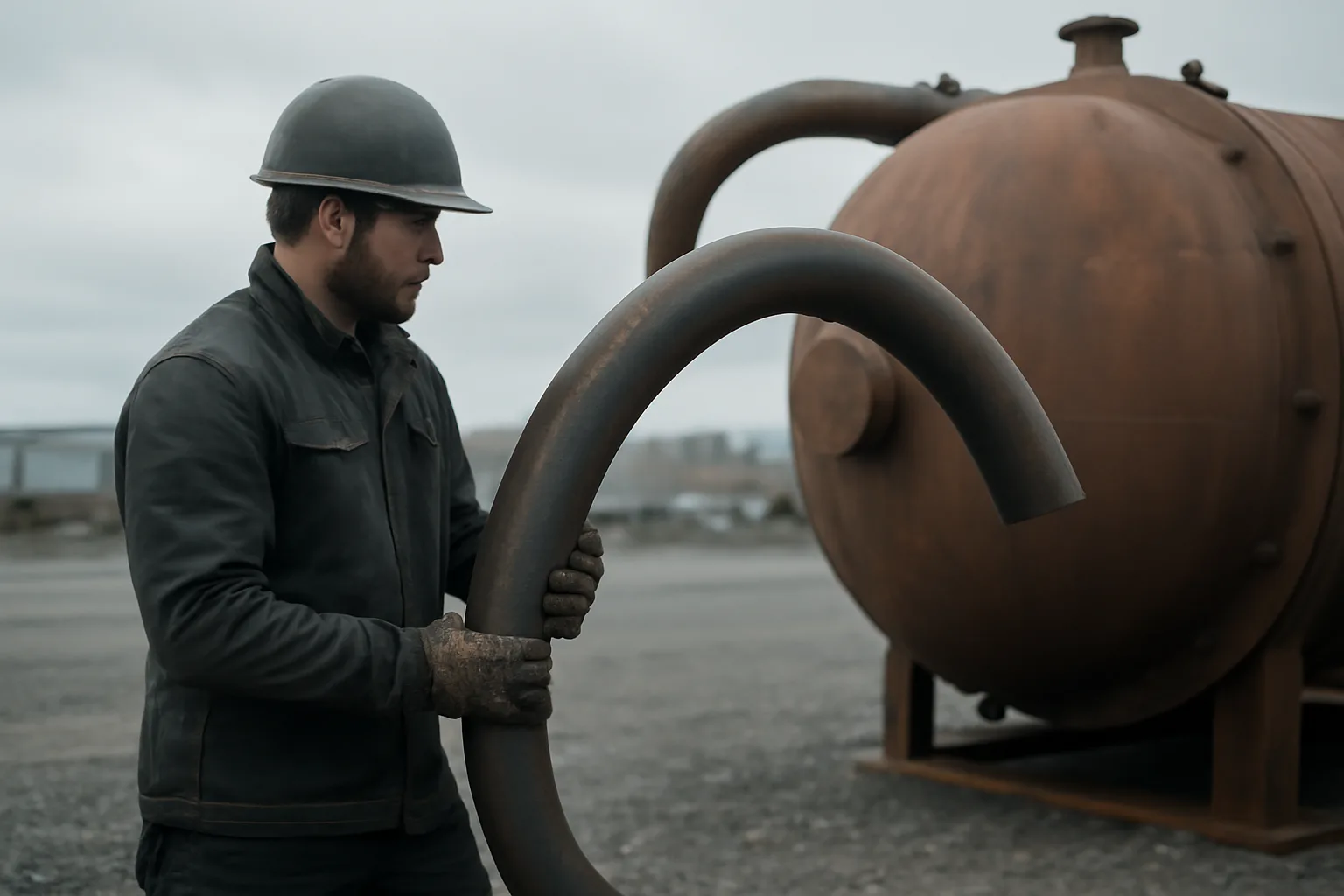
A boilermaker in Connecticut fits, welds, and repairs boilers, tanks, and other pressure vessels. Much of that work is industrial and it travels. Some of it sits right next to licensed heating work inside buildings. Those are two different paper piles. Mix them up and you study for the wrong exam and still get turned away at the gate. [3]
I would not write a check to a long private welding school before I had a hall interview date or a contractor willing to indenture me. Joint programs already teach the welding they want. Paying first for a diploma nobody asked for is a common way to waste a winter.
Bring a high school diploma or GED, a ride that starts in the dark, and a phone that actually gets answered. Drug screens are normal. So is failing a bend test and coming back next week. The BLS notes that boilermakers typically need a high school diploma or equivalent and that most people learn on a 4-year apprenticeship, which matches how this trade still runs. [1]
Want contrast with a bigger, more license-heavy market? Read how to start boilermaker in California after this. Then come back to Connecticut before you copy anyone else's checklist.
Do you need a license for boilermaker in Connecticut?
No. Connecticut does not issue a license titled boilermaker. Chapter 393 of the General Statutes licenses occupations such as heating, piping and cooling work. It does not create a separate boilermaker title. You still need a registered apprentice agreement if you are in a registered program, and you may need a Department of Consumer Protection heating license if the job is building heating work as the statute defines it. [3][4]
People mash three things together and then get mad at the internet. One is the construction trade called boilermaker. Two is a Heating, Piping and Cooling license (the S-class cards) from DCP. Three is the state's boiler inspection law, which sticks to the vessel and the owner, not your job title. [6]
Section 20-334 is the lock on the occupations that do need a card. It says "No person shall engage in, practice or offer to perform the work of any occupation listed in section 20-330 unless such person has first obtained a license as provided in section 20-333." Boilermaker is not on that 20-330 list. Heating, piping and cooling work is. [4][3]
If a superintendent asks for "your boilermaker license," ask them to name the credential. They usually want contractor affiliation, an OSHA card, and welding quals. Do not print yourself a fake title.
Some jobs sit on a line. Setting a heating boiler in a school is HPC territory. Retubing a power plant boiler is classic boilermaker work. Section 20-340 lists exemptions from the Chapter 393 licenses. Read it for your fact pattern, then call DCP if the owner wants a written yes. This site is not a law firm. The board confirms scope. [5]
Chapter 540 is the boiler and water heater statute. Inspection certificates live there. That paper does not make you a licensed boilermaker. [6]
How long does boilermaker take in Connecticut?
Plan on about four years if you stay employed and finish related instruction. The BLS says most boilermakers learn through a 4-year apprenticeship, and Connecticut registered programs follow that national pattern unless the local standard says otherwise. Confirm the hour chart with the JATC and with CTDOL. Nobody can honestly promise your completion date. [1]
The BLS puts it in one clean line: "Most boilermakers learn their trade through a 4-year apprenticeship." That is the national baseline, not a Connecticut guarantee and not a weather forecast for outage season. [1]
Federal rules set a floor. 29 CFR 29.5 lets a program measure a term by on-the-job learning of at least 2,000 hours, by competency, or by a hybrid. The same standard says "A minimum of 144 hours for each year of apprenticeship is recommended" for related instruction. Boilermaker programs usually run far past that 2,000-hour floor. Six thousand on-the-job hours over four years is the number you will hear in the trade. Treat 6,000 as the common shop figure, then read the written standards for the program that actually indentures you. [7]
Your clock runs when you work and when class is credited. A slow New England year stretches the calendar. A heavy travel year shortens it. Nobody publishes a clean public average for time-to-journey in Connecticut. The closest honest statement is the national 4-year design plus the obvious fact that layoff weeks do not count.
Want an HPC journeyperson card for building work too? That is a second clock. DCP sets those hours and the exam. Confirm them on the application for the S-class license you actually need. Do not assume boilermaker hours convert on their own. [14]
How much does boilermaker cost in Connecticut?
Registered apprenticeship is usually cheap at the classroom door because you get paid to work. Your real cash outlay is hall application or initiation money, basic tools and PPE, travel float before per diem shows up, and site cards. I will not invent a current lodge fee or a DCP fee. Those numbers move. Only the hall and the board can confirm what they are charging this month.
Skip the five-figure welding academy unless a contractor said they will not look at you without it. Most will never say that.
A usable first kit (hood, leathers, tape, square, soapstone, wraparound, a couple of spud wrenches, boots that fit) often lands in the low hundreds if you buy used leather and a mid-grade hood. Buying a full tool-truck fantasy in month one is a waste. You will lose tools on the first big outage.
OSHA Outreach 10-hour construction training is what most gates ask for. Trainer prices vary. The card is not a state boilermaker license.
Marine or port-adjacent jobs can require TSA's TWIC, a five-year credential. TSA posts the current enrollment fee on its TWIC page. Confirm it there. Do not budget off a 2019 forum post. [10]
Wages during the program are a percentage of journeyperson scale under the agreement. The BLS reported a median annual wage of $71,140 for boilermakers in May 2023. That is a national median for the occupation, not a Connecticut pay stub and not first-year apprentice pay. [1][2]
Want to see how another state guide talks through money? Boilermaker cost in Alabama is a useful read. Then come back and still confirm every Connecticut dollar locally.
Year-one people leak cash on per diem tracking and hall contacts. BoilermakerPath sells a $129 one-time Per-Diem + Local Hall Kit at /start if you want that pile in one place. You can also follow this guide with a notebook and a phone.
Is a Connecticut heating license the same as being a boilermaker?
No. An HPC license from DCP covers heating, piping and cooling work as defined in section 20-330. A boilermaker is a pressure-vessel fitter and welder, often on industrial boilers, tanks, and stacks. Some people eventually hold both. Most field construction boilermakers never sit the S-2 exam. [3]
Want service work on school and hospital heating boilers? The HPC apprentice-to-journeyperson path is the one DCP will recognize. Want outage work, vessel erection, and travel jobs? The Boilermakers apprenticeship is the one that gets you on those gates.
Holding the wrong card and arguing with a building inspector is a bad morning. Ask the contractor which statute they are bidding under before you pay for a class.
License-heavy states make this mix-up worse because people import checklists. Boilermaker license in California and boilermaker license in Colorado are useful if you might move. Connecticut is lighter on the trade title and pickier about what you are fastening to a building.
What apprenticeship path actually works in Connecticut?
The path that works is a registered program with on-the-job hours, a real contractor, and related instruction a registration agency will recognize. O*NET classifies the job as SOC 47-2011.00 and treats apprenticeship as standard preparation. [8][13]
Call the International Brotherhood of Boilermakers and ask which lodge dispatches Connecticut. Application windows open and close. There is no public, stable quota I can print without making it up. Ask the hall the week you apply.
In parallel, ask the Connecticut Department of Labor's Office of Apprenticeship Training how an apprentice agreement gets filed and which boilermaker standards are on the books. Federal career-seeker pages on apprenticeship.gov say the same thing in plainer English: find a registered program, apply, get selected, sign the agreement. [9]
Non-union contractors can run registered programs. Some do it well. A lot of "helper" seats are just cheap labor with no standards and no hour credit. If they will not put you on an apprentice agreement, you are not starting a boilermaker career in Connecticut. You are renting your back.
I would apply union first in this state. The work is lumpy. A hall that can travel you to outages beats a shop that lays you off in March with 400 undocumented hours.
The same indenture test shows up in other state write-ups. How to start boilermaker in Alabama and how to start boilermaker in Arizona are fair comparisons if you are willing to move for hours.
What cards and papers do you need in the first year?
You need a written apprentice agreement (or a W-2 plus a dated path to that agreement), government ID, and the site safety card named in the hire packet. That is usually OSHA 10 Construction. Some owners want OSHA 30 later. Welding procedure qualifications, often run to an ASME Section IX style test for that shop or site, matter more than a framed school diploma. [11]
TWIC only if the job is a maritime facility and they will not escort you. Five years. Enroll through official TSA channels and ignore anyone selling a shortcut. [10]
A Connecticut driver's license or a ride you control. Outages are not sitting on a bus line.
If the work is licensed HPC work, you need the DCP apprentice permit or the proper S-class license. Confirm the form and the current fee with DCP. Statute 20-333 is the exam authority for those occupational licenses. It is not a boilermaker exam. [14][4]
Keep paper copies and a phone photo of every card. Halls lose files. You will too.
Federal OSHA construction welding and cutting rules in 29 CFR 1926.350 and the rest of Subpart J are the safety floor on most sites. They are not a license. You will still live inside them. [11]
How much do boilermakers make in Connecticut?
The BLS reported a median annual wage of $71,140 for boilermakers in May 2023. Use that as a national midpoint, then set it down when you read a local dispatch list. [1]
Connecticut-specific BLS cells for SOC 47-2011 are often thin or unpublished because the occupation is small. Nobody has great open data on statewide headcount year to year. The closest honest public sources are the national OES table and the scale in the local collective bargaining agreement. [2]
Apprentice pay is a step percentage of journeyperson rate. First-year take-home depends on hours, not the BLS median. A full year at apprentice scale beats a pretty hourly number on a 700-hour year. New England outage work runs feast or famine.
Public jobs use prevailing wage sheets posted by project and classification through the Connecticut Department of Labor Wage and Workplace Standards Division. Do not reuse last year's PDF. [12]
I would not pick this trade for a smooth biweekly paycheck. I would pick it if I can handle travel, overtime spikes, and quiet months without panic.
Should you go union or non-union in Connecticut?
I would go union if the lodge will take me. Dispatch, travel, and a written training standard matter more in a small state than a shop title on a hard hat.
Non-union can work if the contractor registers you, pays related instruction, and writes your hours down. Get that in the agreement before you grind for six months. Handshake hour logs evaporate when the superintendent changes.
Permit work with no indenture is how people stay helpers until they quit. Want the same question asked in a higher-volume market? How to start boilermaker in California still comes back to who will sign your hours.
If you already know you will live on the road, how to start boilermaker in Alaska is a useful contrast on travel culture. Connecticut will not match that camp pattern. You can still get shipped.
What does first-year boilermaker work look like?
You will grind, fit, fire-watch, run parts, and tack when someone trusts your hands. You will not lay out a steam drum in week two. Anyone who promised you that is selling a course.
Class nights cover blueprint reading, trade math, welding theory, and safety. Show up anyway after a 10-hour day. Related instruction is how the 144-hour recommendation becomes hours on your record instead of a rumor. [7]
Connecticut yards and outages run in slush and in heat. Buy winter gear that works before you buy a prettier hood. Cheap gloves in January are how people get stupid on a beam.
Per diem shows up when you travel. Track nights and receipts like it is part of the job, because it is. Mixed-up per diem is how first-year people finish a boom month broke.
Keep a simple hour log even if the hall also keeps one. Arguments about missing weeks happen. Your notebook is the only copy you control.
What mistakes waste a year in this trade?
Waiting for a perfect local job so you never sign a travel list. Buying tools to look experienced. Skipping class because the job ran late. Posting job-site photos. Telling a building inspector that Connecticut "should" have a boilermaker license when they asked for an HPC card on a school boiler.
Another waste is treating a Chapter 540 inspection sticker as if it were your personal credential. It is the vessel's paper. [6]
Paying a middleman who "guarantees" dispatch is also a waste. No publisher and no recruiter can promise a Connecticut board action or a start date. If the hall did not tell you the date, you do not have a date.
What should you do this week to start?
Call the Boilermakers lodge locator and the Connecticut DOL apprenticeship office. Write down application dates in a calendar, not in your head. Schedule OSHA 10 only after a contractor or hall tells you which trainer they accept. Pull your diploma or GED. Fix your voicemail.
If a program says apply next spring, use the winter for fitness, a valid ID, and a quieter driving record. Do not pay anyone who talks like they can walk your file through a board.
BoilermakerPath is an independent publisher, not a law firm and not a service company. Use this page as a reference, then confirm every fee and form with the hall, CTDOL, and DCP. The hall-and-per-diem kit is at /start if you want it after those calls.
Frequently asked questions
Do you need a license for boilermaker in Connecticut?
No standalone boilermaker license exists. Chapter 393 licenses heating, piping and cooling work, not a boilermaker title. You need a registered apprentice agreement in a real program, and you may need a DCP HPC license if the job is building heating work. Confirm scope with DCP for the actual task.
How much does boilermaker cost in Connecticut?
Classroom training is often low cost or included because you earn while you learn. Budget hall fees (confirm with the lodge), a first tool kit often in the low hundreds, OSHA 10, and a TWIC only if a port job needs it. Skip a pricey private welding school unless a hiring source required it.
How long does boilermaker take in Connecticut?
About four years is the national apprenticeship design the BLS describes. Hours count only when you work and finish related class. Federal rules recommend 144 class hours per year and set a 2,000-hour floor that this trade usually exceeds. Confirm the local standard. No completion date is guaranteed.
Is an S-2 heating journeyperson card a boilermaker license?
No. S-class cards are DCP Heating, Piping and Cooling licenses for work defined in section 20-330. A boilermaker is a pressure-vessel construction trade, usually trained through a Boilermakers apprenticeship. Some people later hold both. Ask the contractor which statute the bid sits under.
Can I start at 18 with a GED?
Usually yes. The BLS lists a high school diploma or equivalent as typical, and a GED is the normal equivalent. Halls and contractors still set their own minimums, drug screens, and driving rules. Ask the program that would indenture you before you rearrange your life.
Do I need a welding school diploma first?
Usually no. I would not pay for a long private program before a lodge interview or a contractor indenture. Joint programs teach the welding they want you to pass. If a specific shop names a cert they require on day one, that is the rare case where prepaid school can make sense.
Which union local covers Connecticut?
Ask the International Brotherhood of Boilermakers lodge locator and confirm dispatch counties with the hall. Coverage lines change and printed lists go stale. I will not invent a local number or a current quota. The hall that answers the phone is the source.
Is OSHA 10 a Connecticut boilermaker license?
No. OSHA 10 is a safety outreach card many jobsites require. It does not come from DCP and it does not make you a journeyperson. Get the trainer the contractor named. Keep the card in your wallet and a photo on your phone.
Do I need a TWIC card for boilermaker work in Connecticut?
Only if you need unescorted access at a maritime facility that requires it. TWIC is a TSA credential valid for five years. Confirm the current enrollment fee on TSA's TWIC page. Inland power-plant work often never asks for one.
Can I transfer an out-of-state boilermaker apprenticeship into Connecticut?
Often, if the new sponsor and the registration agency accept the hours. Bring transcripts and the old agreement. Transfer of apprenticeship hours is not an automatic DCP heating license. Those are separate systems. Get both answers in writing.
Are there year-round boilermaker Connecticut jobs?
Not reliably. Hours follow outages, shutdowns, and fabrication bids. A small state means you should expect travel if you want a full year. People who refuse every travel call stretch a four-year program into something much longer.
What tools should I buy first?
Used leathers, a decent hood, a 25-foot tape, a combination square, soapstone, a wraparound, basic spud wrenches, and boots that fit. Confirm any required list with the JATC before you spend. Fancy brand-new chests are a waste in month one.
Does Chapter 540 give me a boilermaker license?
No. Chapter 540 is Connecticut's boiler and water heater inspection law. It governs certificates on equipment, not your right to use the job title boilermaker. Do not treat an inspection sticker as a trade license.
How do I confirm a program is really registered?
Ask the Connecticut DOL Office of Apprenticeship Training and demand a written apprentice agreement. Federal orientation is on apprenticeship.gov. If the only paper is a verbal "we will take care of you," you are a helper, not an apprentice.
Sources
- U.S. BLS Occupational Outlook Handbook, Boilermakers: Most boilermakers learn through a 4-year apprenticeship; median annual wage $71,140 in May 2023; typical education is a high school diploma or equivalent.
- U.S. BLS OEWS occupational profile 47-2011 Boilermakers: National wage and employment estimates for boilermakers (SOC 47-2011); state cells can be thin.
- 29 CFR § 29.5 Standards of apprenticeship: Time-based on-the-job learning of at least 2,000 hours; recommends a minimum of 144 hours of related instruction each year.
- O*NET OnLine 47-2011.00 Boilermakers: Federal occupation profile for boilermakers, SOC 47-2011.00, with apprenticeship as standard preparation.
- U.S. Department of Labor, Apprenticeship.gov Career Seekers: Federal guidance for finding and entering a registered apprenticeship program.
- Transportation Security Administration, TWIC program page: TWIC is the federal credential for unescorted access at maritime facilities and is issued for a five-year term; current fee is posted by TSA.
- OSHA 29 CFR 1926.350 Gas welding and cutting: Federal construction standard covering welding and cutting practices on construction sites.
- Connecticut DOL Wage and Workplace Standards, Prevailing Wage: Connecticut posts prevailing wage rates by public project and classification through this DOL division.